

Key Takeaways
- Patient lifts support safe and efficient transfers for individuals with limited mobility.
- Choosing the right lift requires understanding types, features, and technological advancements.
- Proper training and careful product selection ensure safety for both caregivers and patients.
Table of Contents
- Understanding Patient Lifts and Their Importance
- Types of Patient Lifts Available
- Key Features to Consider When Purchasing a Patient Lift
- Technological Advancements in Patient Lifts
- Benefits of Using Patient Lifts in Healthcare Settings
- Considerations for Home Use
- Conclusion
Understanding Patient Lifts and Their Importance
Patient lifts have become indispensable in both hospital and home care settings, offering critical support for the safe transfer of individuals with mobility challenges. By dramatically reducing the risk of falls and injuries, these devices play a vital role in protecting the well-being of patients and caregivers alike. For those searching for patient lifts for sale, it is essential to ensure the chosen equipment best matches the specific mobility and care requirements of your environment.
The Centers for Disease Control and Prevention (CDC) emphasizes that effective lift use is a cornerstone of safe patient handling and mobility programs. This not only enhances patient comfort but also protects healthcare providers from work-related musculoskeletal disorders. By integrating patient lifts into daily care routines, facilities can foster a safer, more dignified experience for everyone involved.
Types of Patient Lifts Available
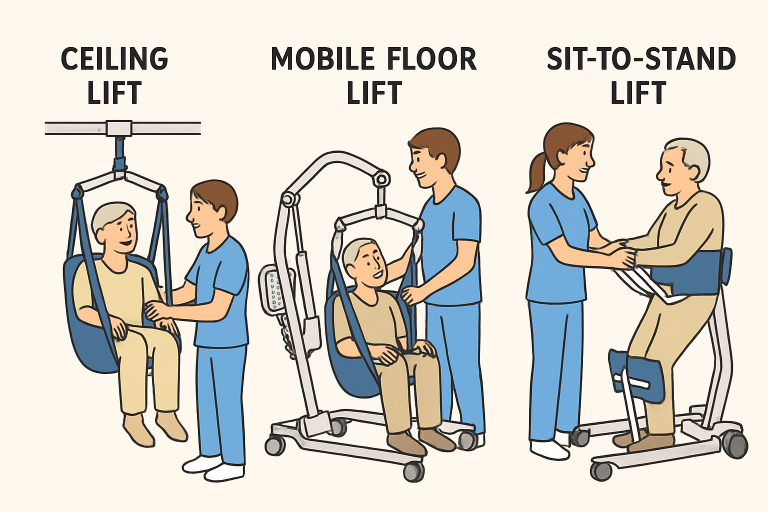
Selecting the appropriate patient lift starts with understanding the primary categories available today. Each type is designed to meet specific patient needs and environmental constraints:
- Ceiling Lifts: Installed on overhead tracks, these systems free up floor space and provide seamless movement between rooms or bed spaces. They’re ideal for facilities seeking an unobtrusive, yet highly efficient lifting solution.
- Mobile Floor Lifts: Often found in rehabilitation centers and private homes, these portable lifts offer remarkable versatility and can be moved as needed for patient transfers in different areas.
- Sit-to-Stand Lifts: These devices help patients move from a seated to a standing position, supporting rehabilitation and active participation in daily life activities. Sit-to-stand lifts are beneficial for those who have partial weight-bearing capacity.
- Bath and Pool Lifts: Essential in wet environments, these lifts facilitate safe, dignified access for bathing and hydrotherapy.
Facilities and caregivers must assess which lift type best supports their patient population and care setting before making a purchase.
Key Features to Consider When Purchasing a Patient Lift
With a wide array of products available, honing in on crucial features will help you make a sound, future-proof investment:
- Weight Capacity: Verify that the lift can safely accommodate your patient’s weight. Exceeding weight limits not only endangers patient safety but can also damage the equipment.
- Portability: Analyze whether you’ll benefit most from a stationary system or if frequent equipment relocation is necessary. Lightweight, foldable designs are advantageous for home use or multi-room transfers.
- Ease of Use: Look for patient lifts with intuitive controls, adjustable base widths, and ergonomic handles. Features that simplify operation directly impact caregiver workload and patient experience.
- Safety Features: Emergency stops, secure slings, and reliable locking mechanisms are non-negotiable components. Comprehensive safety systems ensure peace of mind for both patients and staff.
Technological Advancements in Patient Lifts
The patient lift industry has witnessed remarkable technological advances. Newer models feature AI-driven support systems, sensors, and algorithms that monitor the patient’s weight distribution and motion, minimizing the risk of mishaps during transfers. With built-in digital health monitoring and automated alerts, these advancements enable more personalized, safer patient handling. R
Benefits of Using Patient Lifts in Healthcare Settings
The proper use of patient lifts in hospitals, rehabilitation centers, and long-term care facilities brings measurable improvements to operational safety and efficiency:
- Enhanced Safety: Staff and patient injuries from manual transfers are dramatically lowered, ensuring a healthier work environment and better patient outcomes.
- Increased Efficiency: Transfers can be conducted more swiftly with fewer staff, streamlining workflow and reducing wait times.
- Improved Patient Comfort: Smooth, planned movements reduce anxiety and discomfort, enabling patients to retain dignity and confidence during care routines.
For more on patient transfer safety and its impact on healthcare staff, OSHA’s Safe Patient Handling resources highlight strategies and guidelines for optimal use.
Considerations for Home Use
For families and home caregivers, portable and easy-to-operate patient lifts are favored for their practicality in smaller spaces. Home lifts should offer maneuverability, stability, and hassle-free storage, ensuring caregivers can operate them with confidence. Adequate training in lift operation and patient positioning is critical for ongoing safety in home settings, and product manuals and video tutorials are valuable supplementary resources.
Conclusion
Choosing the right patient lift is a pivotal decision in optimizing mobility, safety, and care quality in any setting. Awareness of lift types, essential features, and innovative technologies can guide your selection process, ensuring that patients and caregivers alike experience the utmost safety and comfort. As patient populations age and healthcare demands rise, investing in dependable patient lifts is an investment in long-term well-being and dignity for all involved.