

Key Takeaways
- Choose books that align with your child’s interests to maintain engagement.
- Ensure content matches your child’s developmental stage.
- Look for books with rich vocabulary and interactive features.
- Bilingual books support both language development and cultural awareness.
- Professional recommendations can guide your selection process.
Table of Contents
- Understand Your Child’s Interests
- Age-Appropriate Content
- Rich Vocabulary and Interactive Elements
- Incorporate Bilingual Books
- Seek Professional Recommendations
- Engage in Interactive Reading
- Create a Conducive Reading Environment
- Monitor Progress and Adapt
- Conclusion
Helping your child learn a new language can open doors to cultural understanding, academic achievement, and future opportunities. The journey often begins with a single book, making it essential to select one that not only supports learning but also sparks curiosity and enjoyment. When searching for engaging children’s language learning books, it is important to consider factors such as age appropriateness, interactive content, and how well they match your child’s interests.
With so many options available, many parents feel overwhelmed when deciding which book will best introduce their child to language learning. By focusing on your child’s personality and learning style, you can create an environment where language acquisition feels like an adventure rather than a chore. Thoughtfully chosen books lay the groundwork for lifelong learning, increased confidence, and a love of communication across cultures.
Understand Your Child’s Interests
Children thrive when learning is connected to what genuinely excites them. Whether your child is drawn to stories about dinosaurs, fairy tales, or science, tapping into these interests can make language learning more appealing. When children see their own passions reflected in a book, they approach new vocabulary and language structures with more enthusiasm and curiosity. According to Common Sense Media, empowering kids to choose books based on their favorite subjects encourages a deeper connection to the learning process. This connection can transform daily reading into a highly anticipated activity.
Age-Appropriate Content
Matching a book to your child’s developmental stage is critical for maintaining their interest and fostering growth. If the language used is too advanced, your child may become frustrated or confused. On the other hand, content that is too simple may fail to hold their attention or spur continued growth. Experts at The Hanen Centre recommend selecting books that reflect your child’s comprehension skills and gradually expanding their selection as their abilities grow.
Rich Vocabulary and Interactive Elements
Books featuring a wide range of vocabulary words, especially those presented in meaningful contexts, play a major role in helping children expand their linguistic abilities. Moreover, interactive components, such as lift-the-flap sections, tactile elements, or opportunities to answer questions, keep young learners engaged. These features support active participation, which can lead to better information retention and a positive attitude towards learning a new language. The Childwise blog explains that combining new words with interactive play strengthens connections in the brain and supports overall language development.
Incorporate Bilingual Books
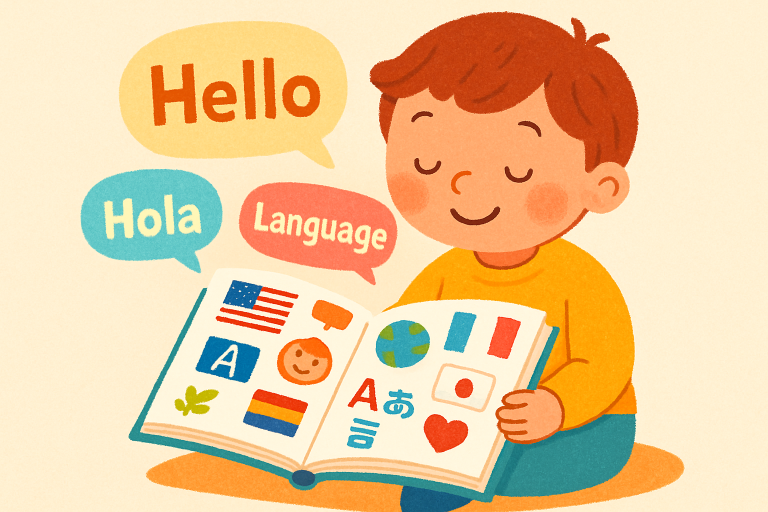
Bilingual books encourage children to make connections between two languages and cultures. These types of books often feature side-by-side translations or helpful context clues that make deciphering new words easier. For families raising multilingual children or seeking to broaden their child’s understanding of different cultures, bilingual books offer a simple yet powerful learning resource. Start with a Book offers a collection worth exploring for parents and educators interested in this approach.
Seek Professional Recommendations
Teachers, language specialists, and librarians are valuable resources when selecting language learning books. Their expertise allows them to identify books that cater to different proficiency levels, interests, and learning preferences. Consulting these professionals can introduce you to titles and learning strategies you may not have discovered on your own, and they can tailor recommendations to address your child’s unique strengths and challenges.
Engage in Interactive Reading
Sharing the reading experience by asking questions, prompting your child to make predictions, or relating the story to everyday life can significantly boost comprehension and retention. Interactive reading transforms a passive activity into a collaborative adventure, making language learning sessions more memorable and effective. Techniques such as dialogic reading have been shown to help children develop vocabulary and narrative skills more quickly, according to research cited by Parents.com.
Create a Conducive Reading Environment
Establish a dedicated, distraction-free space for reading. A reading nook equipped with comfortable seating and good lighting not only encourages regular reading habits but also signals to your child that reading is a valued and enjoyable part of daily life. Consistent routines and cozy environments can build positive associations with both books and the learning process.
Monitor Progress and Adapt
Children’s interests and abilities evolve as they grow, necessitating regular reassessment of book selections to ensure continued engagement and challenge without causing overwhelm. If certain books or methods become ineffective, maintaining flexibility to explore new titles or techniques is crucial for sustaining motivation and enhancing language development. Carefully selecting language-learning books tailored to a child’s interests, developmental stage, and learning environment is vital for fostering robust language skills and a lifelong love of reading. Thoughtful choices made today will establish a strong foundation for confident multilingual communication in the future.
Conclusion
To nurture a child’s language development, it is essential to choose age-appropriate books that reflect their interests and incorporate rich vocabulary and interactive elements. Exploring bilingual options, seeking advice from educational professionals, and establishing engaging reading routines in a comfortable environment further enhance the learning experience. Regular progress monitoring and adaptation to the child’s evolving skills foster continuous growth and a lasting love for reading and confident communication.